Google will launch AI chips into orbit on October 1st
Google launches a TPU-equipped satellite on October 1st aboard a Falcon 9, the first flight test of Project Suncatcher's plan to study AI compute in orbit.
Updated
Why it matters
- Google's Project Suncatcher satellite, carrying Tensor Processing Units, launches aboard a SpaceX Falcon 9 on October 1st.
- The mission will measure how well TPUs "handle the physical stress of spaceflight and the radiation and thermal extremes of space," per Google.
- Project Suncatcher is Google's experimental initiative that could eventually place AI data centers in low Earth orbit, powered by sunlight.
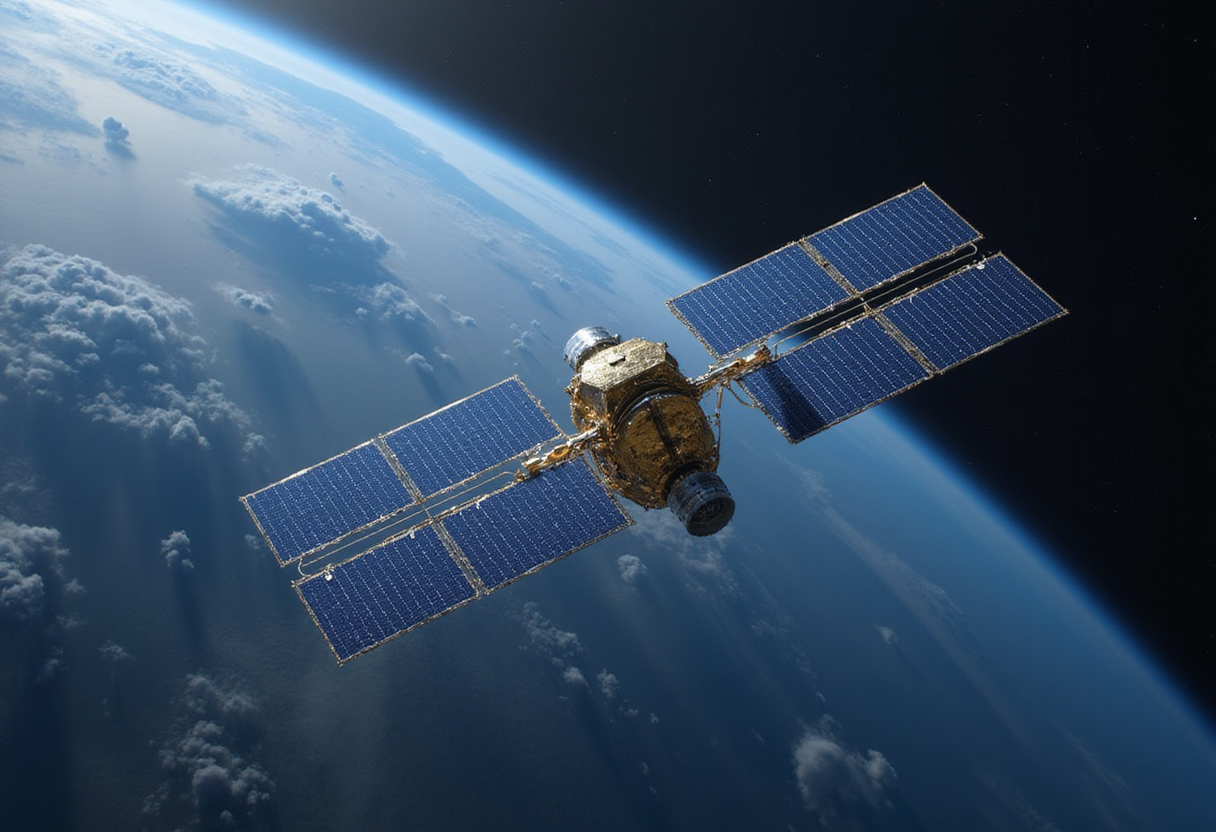
Google is sending a satellite carrying its own AI processors into space on October 1st, the company's first hardware test for an experimental program that could eventually put AI data centers into orbit.
The satellite, equipped with Google's Tensor Processing Units — the custom chips that power the company's machine learning workloads — will ride to low Earth orbit aboard a SpaceX Falcon 9 rocket. The New York Times, which first reported the launch timing, described the mission as a milestone for Project Suncatcher, Google's initiative to explore whether compute infrastructure can operate beyond Earth.
The stakes are straightforward. AI training and inference consume enormous amounts of electricity, and terrestrial data centers face growing constraints on power, land, and cooling. Orbit offers what Google describes as an abundant alternative: the satellite can harness the power of the sun in low Earth orbit, drawing energy that does not compete with ground-based grids. If AI accelerators can survive the trip and operate reliably, space becomes a candidate location for the industry's most energy-hungry workloads.
What the mission will measure
Google has defined the test narrowly. According to the company, the goal of the mission is to measure how well its TPUs "handle the physical stress of spaceflight and the radiation and thermal extremes of space."
Each element of that sentence corresponds to a known engineering problem. A Falcon 9 launch subjects hardware to violent vibration and acceleration. Once in orbit, electronics face ionizing radiation that can flip bits and degrade silicon, along with thermal cycling as the spacecraft moves between direct sunlight and shadow. TPUs were designed for climate-controlled data centers, not vacuum.
Google has not publicly committed to deploying operational orbital data centers. Project Suncatcher remains, by the company's own framing, an experimental initiative — and this launch is its first step toward answering the underlying question. The Verge, which covered the announcement, noted that the program "could eventually put AI data centers" into orbit, a phrasing that reflects how early the effort remains.
Why the timing matters
The launch lands at a moment when the AI industry's power consumption has become a first-order business and policy problem. Hyperscalers are signing nuclear deals, reviving dormant plants, and queuing for grid capacity that utilities cannot deliver on traditional timelines. Against that backdrop, any architecture that moves compute off the grid carries commercial weight, even at the scale of a single experimental satellite.
Google is not alone in treating orbit as an engineering frontier, but the company brings a specific advantage: it designs its own AI silicon. Testing TPUs directly, rather than commercial off-the-shelf processors, gives Google end-to-end control over both the hardware being evaluated and, eventually, any software stack running on it.
What comes after October 1st
The immediate deliverable from the mission is data. Radiation exposure, thermal behavior, and post-launch performance of the TPUs will tell Google whether space-rated versions of its accelerators are worth building, and at what cost.
A single satellite does not make an orbital data center. But Google's decision to fly its own AI chips on a commercially available rocket — rather than running simulations or relying on third-party radiation testing — signals that the company treats space-based compute as an engineering question with a measurable answer, not a thought experiment.
The results will shape whether Project Suncatcher expands from one test satellite toward the orbital infrastructure its name implies.
Original: nytimes.com
More from Sophie Lindqvist
Show full bio
Staff writer covering regulation, policy and their impact on artificial intelligence and machine learning at AI In Context.
257 articles
Related articles
- Google Will Launch Its First AI Test Satellite on Oct. 1
- Google's First Suncatcher Orbital Data Center Test Launches October 1
- Google just put a TPU in orbit — and says Starship must fly 1,800 more times to make space data centers real
- Google's Suncatcher sends a fridge-sized AI satellite to orbit on October 1
- Google's AI Chips Head to Orbit Aboard SpaceX Falcon 9