Google Will Launch Its First AI Test Satellite on Oct. 1
Google's Project Suncatcher launches its refrigerator-sized 'MWP' satellite on a SpaceX rideshare Oct. 1 to test whether TPUs can run AI workloads in orbit, with laser-link milestones set for 2027.
Updated
Why it matters
- Google launches a refrigerator-sized test satellite called 'MWP' on a SpaceX Transporter 18 rideshare flight on Oct. 1, in partnership with Planet, as part of Project Suncatcher.
- Satellites can access eight times more solar power than earthbound structures, according to Google's blog post explaining the energy rationale for orbital AI compute.
- Google's next milestone, targeted for 2027, is testing high-bandwidth laser links between two additional AI satellites; Quandary Peak Research's Mahdi Eslamimehr cautions: "Proving that chips work in orbit is not proving a business model."
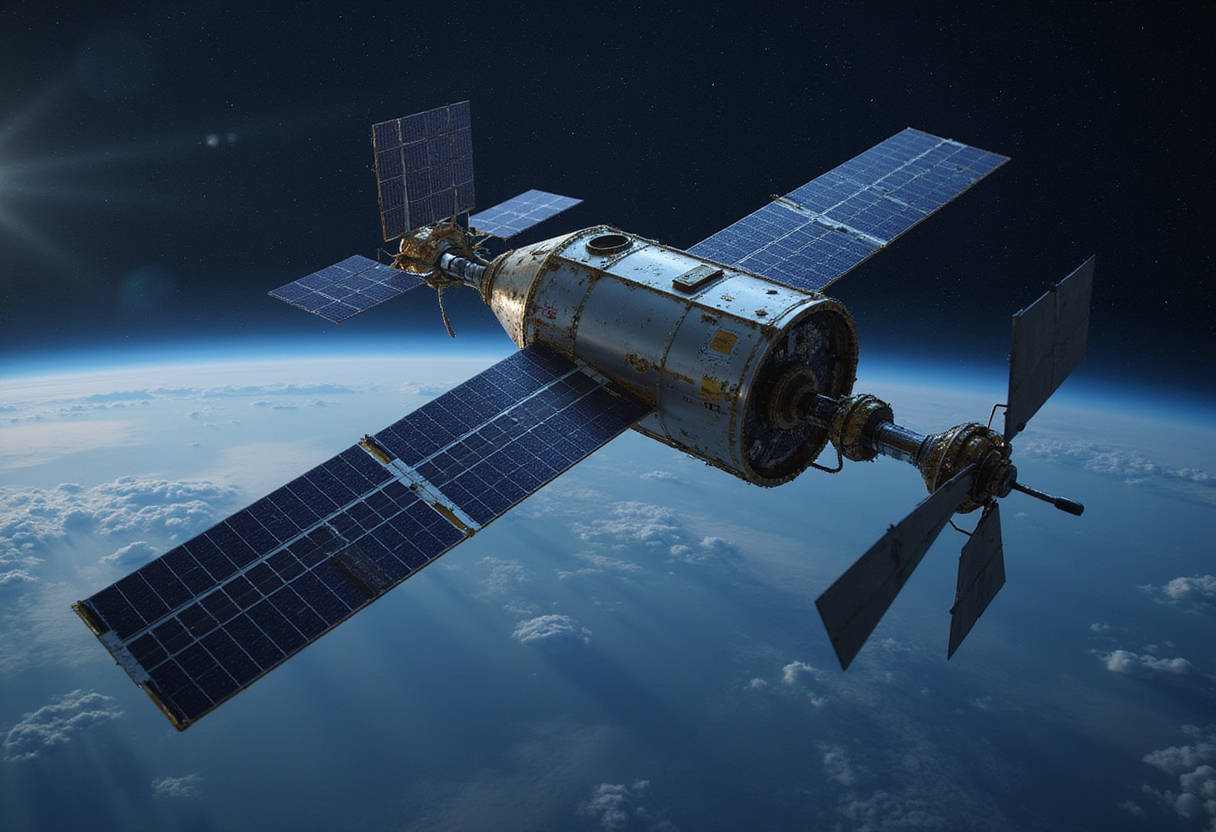
On Oct. 1, Google plans to put a refrigerator-sized test satellite called "MWP" into orbit aboard a SpaceX Transporter 18 rideshare flight, in the company's first concrete attempt to prove that AI chips can do useful computation in space.
The satellite, named "MWP" according to The New York Times, will not run huge medical research studies or beam back streaming data. It will be low-powered, run entirely on solar energy, and exist for one purpose: testing the concept of AI computation in orbit. Google is running the mission in partnership with satellite imaging company Planet, as part of Project Suncatcher, an initiative the company announced late last year.
This is not yet a data center in space — the much-hyped concept that AI entrepreneurs like Elon Musk have spent the last year promoting. But it is also not nothing. In a blog post that includes videos of Google's research teams preparing for launch — including tests to confirm that TPUs, a type of AI chip, can withstand the vibration of a rocket ride — the company framed the October flight as a small early step in a long-term moonshot: "exploring whether space could one day host scalable machine learning infrastructure."
Google's CEO put it more bluntly in a post on X: "Can our TPUs survive and operate in space? Well, we're going to find out."
Why Google wants AI in orbit
The company's blog post gives a straightforward answer: energy. Satellites can access eight times more solar power than earthbound structures, Google explained, making orbit a potentially huge energy resource for future data centers. That resource could also bypass a problem that has become politically toxic on the ground.
"Eventually, it could be possible to link together multiple constellations of satellites, allowing them to manage larger AI workloads while in orbit," writes Travis Beals, Google's senior director for Paradigms of Intelligence.
That vision faces basic physical obstacles. Google, SpaceXAI and Nvidia all want to deploy AI technology beyond Earth's surface, but any data center satellite would need to survive radiation, extreme temperatures and the physical stress of launch. Operators would also need to navigate an increasingly crowded orbital environment filled with other satellites and debris.
Google is moving quickly regardless. Assuming the October test succeeds, the company plans to advance Project Suncatcher toward tangible results within the next few years. Its next milestone, targeted for 2027, is testing high-bandwidth laser links after launching two more AI satellites with Planet.
Laser communication, Beals wrote, is far harder than it sounds. "Maintaining the necessary connection requires extraordinary precision, similar to hitting a coin-size target from miles away while both points are in motion," he said.
A data center backlash workaround?
The timing is not accidental. Space-based compute sounds attractive to tech companies right now because terrestrial data centers face a massive public backlash, and a pro-data center PR campaign backed by tech giants may not be enough to counter it.
Protests have sprung up across the United States over data centers' energy and water use, pollution, and potential physical effects on people living nearby. The issue could even become a flashpoint of voter discontent heading into this year's midterm elections.
Putting data centers in space would, presumably, sidestep the problem of communities not wanting them nearby. But it will be costly, and there is no guarantee the business model will pay off enough to make it viable, said Mahdi Eslamisme — Mahdi Eslamimehr, executive vice president at Quandary Peak Research.
"Proving that chips work in orbit is not proving a business model," Eslamimehr said. Even if the business of data in space proves workable, it will not lower anyone's electricity or water bills anytime soon or replace current data center projects. "I welcome the experiments, but I expect everyday AI services to remain overwhelmingly dependent on terrestrial facilities in 2027 and 2028," he said.
His bottom line on the timeline: "A promise about 2035 does not pay an electricity bill in 2026."
What October actually tests
The stakes of the Oct. 1 launch are therefore modest and real at the same time. MWP will not process heavy workloads. It will demonstrate whether Google's TPU hardware can survive the trip and operate on solar power in the orbital environment — the foundational question for everything Project Suncatcher wants to build afterward.
The milestone map Google has disclosed runs through at least 2027, when the two follow-on Planet-partnered launches and laser-link tests would determine whether constellations of satellites can coordinate on larger AI workloads. Each stage depends on the previous one succeeding.
For now, the experiment's value is informational rather than commercial. Google gets real-world data on how its silicon behaves in orbit, space advocates get a proof point for the orbital-compute thesis, and critics get confirmation that none of this changes the ground-level politics of data center construction before the next election cycle. Whether any of it scales into infrastructure — or remains a moonshot — depends on what happens after MWP reaches orbit.
Original: spacex.com
More from Marcus Bennett
Show full bio
Senior reporter covering companies, deals and strategy in artificial intelligence and machine learning at AI In Context.
240 articles
Related articles
- Google will launch AI chips into orbit on October 1st
- Google's First Suncatcher Orbital Data Center Test Launches October 1
- Google's AI Chips Head to Orbit Aboard SpaceX Falcon 9
- Google's Suncatcher sends a fridge-sized AI satellite to orbit on October 1
- Google just put a TPU in orbit — and says Starship must fly 1,800 more times to make space data centers real